China Top High Speed DC Motor Manufacturers?

Time:2026-09-09 Author:Liam
0%

China has become a major source of compact motion systems for robotics, medical equipment, automation, and consumer devices. Among these products, the High Speed DC Motor stands out for its strong torque-to-size ratio, rapid response, and flexible control. However, choosing a reliable manufacturer requires more than comparing catalog prices.

This guide examines leading Chinese manufacturers through practical and technical criteria. These include operating speed, voltage range, torque stability, brush life, noise levels, thermal performance, and production capacity. Factory experience also matters. A supplier that can provide winding samples, load-test reports, dimensional drawings, and traceable quality records usually inspires greater confidence. Ask for evidence.

Real-world performance may differ from laboratory figures. A motor rated at 30,000 rpm can behave differently under continuous load, heat, vibration, or frequent starts. Buyers should review testing conditions carefully. Certifications, inspection procedures, warranty terms, and after-sales support also deserve attention, especially for international projects. Communication quality is often overlooked.

No manufacturer is perfect.

Some suppliers offer excellent customization but limited documentation. Others provide strong engineering support while requiring higher minimum order quantities. This article compares these trade-offs without treating promotional claims as final proof. It also considers application fit, delivery reliability, prototype support, and long-term cooperation. The goal is practical: helping engineers, purchasing teams, and product developers identify a capable China-based partner for their specific High Speed DC Motor requirements. Careful verification remains essential before any purchasing decision.
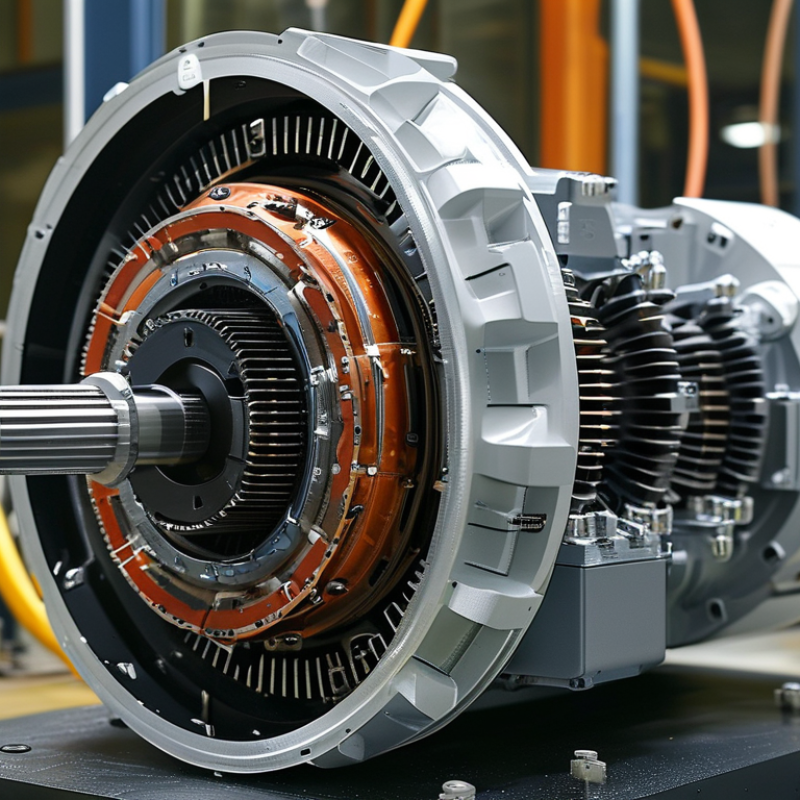
China Top High Speed DC Motor Manufacturers?

Definition and Role of High-Speed DC Motors

Definition and Role of High-Speed DC Motors

A high-speed DC motor converts electrical energy into rapid rotational motion. Its speed often exceeds 10,000 revolutions per minute, although the boundary changes by application and design. Permanent magnets, electronic commutation, and balanced rotors support stable operation. The motor’s real value is not speed alone. It delivers quick acceleration, compact power, and precise control in pumps, compressors, medical tools, and automated equipment.

The International Energy Agency reports that motor-driven systems consume about half of global electricity. The U.S. Department of Energy also estimates that motor systems use nearly 70% of industrial electricity in the United States.

These figures explain the motor’s role in energy planning. A high-speed DC motor can reduce equipment size and improve response time. However, efficiency depends on the controller, cooling method, bearings, and operating load. A fast motor can waste energy when poorly matched.

The boundary remains fuzzy.

In practical testing, vibration often becomes the first warning. Heat near the bearing housing may reveal imbalance before failure. Engineers should check torque at the working speed, not only the advertised maximum. The IEC 60034 series provides widely used guidance for rotating electrical machines, including performance and thermal considerations. Yet real installations are less predictable. Dust, sudden load changes, and imperfect alignment can reduce service life. That uncomfortable detail matters when selecting high-speed DC motor manufacturers in China.

Key Performance Standards for Evaluating Chinese Manufacturers

China Top High Speed DC Motor Manufacturers?

Evaluating Chinese high-speed DC motor manufacturers requires more than comparing catalog speed and price. The International Energy Agency reports that electric motor systems consume about 53% of global electricity. Efficiency deserves serious attention. Ask for measured efficiency curves, not isolated peak values. Tests should follow IEC 60034-2-1, with voltage, load, temperature, and instrumentation clearly recorded. A credible supplier can provide traceable reports from an ISO/IEC 17025-accredited laboratory.

Mechanical stability is equally important. Check maximum continuous speed, rotor balancing, bearing temperature, vibration, brush wear, and commutation quality. ISO 21940 balancing practices can help define acceptable rotor performance. For a high-speed motor, a small imbalance may become noticeable within minutes. Thermal tests should follow IEC 60034-1 principles, including temperature-rise limits and duty-cycle conditions. Ask for repeated results across several samples. One successful prototype proves little.

Manufacturing evidence matters more than polished presentations. Review incoming-material controls, winding inspection, magnet consistency, shaft runout, and end-of-line testing. ISO 9001 certification supports process discipline, but it does not guarantee every motor performs equally. Request capability data, failure records, and corrective-action examples. Some evaluations remain too shallow. They trust certificates and overlook aging tests. A stronger audit compares three production batches under identical loads. Include noise, vibration, and electromagnetic compatibility checks when the motor enters sensitive equipment. The cheapest quotation may hide expensive thermal or maintenance risks.

China Top High Speed DC Motor Manufacturers? Key Performance Standards for Evaluating Chinese Manufacturers

This chart presents a neutral procurement-weighting model for comparing high-speed DC motor suppliers. Efficiency, speed control, thermal performance, reliability, standards compliance, and testing documentation are commonly assessed during technical qualification. The percentages are evaluation weights rather than company or brand performance data.

Leading High-Speed DC Motor Manufacturers in China

Leading High-Speed DC Motor Manufacturers in China

China’s leading high-speed DC motor manufacturers serve automation, medical equipment, robotics, and compact power systems. Experienced suppliers usually offer brushed and brushless DC motor options, with speeds ranging from several thousand to over 50,000 revolutions per minute. Their engineering teams assess torque, heat, vibration, noise, and service life before recommending a design. This matters because a motor that performs well in testing may behave differently inside a sealed machine. Real project feedback often reveals overlooked issues, especially during continuous operation.

Reliable manufacturers provide technical drawings, winding data, performance curves, and sample testing. They should explain how magnets, bearings, insulation, and balancing methods affect motor stability. Quality systems and relevant electrical safety documentation also deserve careful review. However, documentation alone is not proof of consistent production. Factory audits, production samples, and traceable inspection records offer stronger evidence. Some suppliers communicate well at the quotation stage, yet respond slowly after customization begins. That weakness should not be ignored.

Tips: Define voltage, speed, torque, load pattern, shaft size, and operating temperature clearly. Ask for test data under conditions close to your application. Check noise and vibration results, not only maximum speed. Request a sample before approving mass production. Leave room for improvement. Even a well-designed motor may need another adjustment after real-world installation.

Manufacturing Technologies and Quality Control Practices

China Top High Speed DC Motor Manufacturers?

High-speed DC motor production depends on tight process control, not impressive catalog claims. The IEA estimates that electric motor systems consume roughly half of global electricity, making efficiency a serious engineering concern. Manufacturers typically use precision CNC machining, automated winding, dynamic rotor balancing, and vacuum pressure impregnation. These processes reduce eccentricity, insulation voids, and heat-related failures.

For high-speed assemblies, rotor balance is critical. A few milligrams of imbalance can create strong vibration at elevated revolutions. Quality teams measure shaft runout, vibration, insulation resistance, no-load current, torque, and thermal rise. IEC 60034-1 and IEC 60034-2-1 provide widely used references for motor ratings and efficiency testing. ISO 9001-based traceability also links each motor to material batches, operators, and test records. Still, testing is not flawless. A short endurance test may miss bearing wear after months of cycling. Small errors matter.

Tips: Ask for speed-specific balancing records, not only a general inspection certificate. Check whether test equipment is calibrated and traceable. Request torque-speed curves at operating temperature. Review the failure-analysis process for rejected units. Data beats confidence. A useful audit should also inspect winding tension, magnet adhesion, commutator quality, and cooling-path cleanliness. The U.S. Department of Energy reports that motor-driven systems represent a major share of industrial electricity use, so small efficiency losses can become significant operating costs.

China Top High Speed DC Motor Manufacturers? - Manufacturing Technologies and Quality Control Practices

Evaluation Dimension Manufacturing Technology or Practice Typical Technical Data or Control Point Quality-Control Method Relevant Standard or Reference
Motor Architecture High-speed brushed DC or brushless DC motor design Operating speed is defined according to voltage, load, winding design, bearing system, and rotor balance. Design verification includes torque-speed, current, temperature-rise, efficiency, and no-load speed testing. IEC 60034 series; application-specific customer specifications
Magnetic Circuit Laminated electrical-steel stator cores and permanent-magnet rotor assemblies Core geometry, lamination thickness, magnet grade, air gap, and magnetic polarity are controlled during production. Incoming material inspection, dimensional measurement, polarity verification, and magnetic-flux sampling. Material certificates; approved engineering drawings; incoming inspection procedures
Coil Winding Automated or semi-automated winding, wire tension control, and programmed winding patterns Turns count, wire diameter, winding resistance, phase balance, and coil placement are defined by the motor design. Resistance testing, inductance comparison, turn-to-turn surge testing, and visual inspection. IEC 60034-1; internal process control plans
Insulation System Enamelled copper wire, slot insulation, insulating sleeves, varnish, or resin impregnation Insulation class and permissible temperature rise are selected according to the application and duty cycle. Insulation-resistance and dielectric-strength tests are performed before shipment or at defined production stages. IEC 60034-1; IEC 60085 for thermal classification
Rotor Manufacturing Precision shaft machining, magnet bonding or retention, and rotor dynamic balancing Concentricity, shaft runout, adhesive curing conditions, and balance quality are controlled to reduce vibration at high speed. Runout measurement, bond inspection, overspeed validation where required, and vibration testing. ISO 21940 for rotor balancing; approved mechanical drawings
Bearing System Ball bearings, sleeve bearings, or application-specific high-speed bearing arrangements Bearing selection considers speed rating, radial load, axial load, lubrication, operating temperature, and service life. Supplier certificate review, dimensional checks, grease verification, and noise or vibration testing. ISO 281 for rolling-bearing rating life calculations
Commutator and Brush Control Precision commutator assembly, brush-grade selection, spring-force control, and commutation optimization Brush material, commutator geometry, contact pressure, sparking level, and operating current are matched to the duty cycle. Visual inspection, commutator runout measurement, current-load testing, and noise or sparking evaluation. IEC 60034 series; product-specific validation criteria
Electronic Commutation Hall-sensor or sensorless BLDC control with PWM-compatible drive electronics Phase sequence, Hall timing, controller compatibility, back-EMF waveform, and current limits are verified. Functional testing across the specified voltage, speed, load, and direction ranges. IEC 61800-3 where a drive system is included; EMC requirements as applicable
Housing and Thermal Management Aluminum or steel housings, press-fit components, cooling fins, ventilation paths, or integrated heat sinks Housing dimensions, mounting tolerances, airflow path, surface finish, and heat dissipation capability are controlled. CMM or gauge inspection, thermal mapping, temperature-rise testing, and surface-finish checks. IEC 60034-1; ISO 2768 where general tolerances apply
Assembly Process Controlled pressing, adhesive dispensing, screw fastening, connector installation, and end-play adjustment Press force, adhesive quantity, curing time, fastening torque, shaft end play, and connector seating are recorded. Work-in-process inspections, torque verification, traceable operator records, and poka-yoke controls. ISO 9001 quality-management practices
Electrical Performance Computerized dynamometer testing and automated end-of-line measurement Torque, speed, input current, output power, efficiency, no-load current, and temperature rise are measured against approved limits. 100% end-of-line functional testing or statistically defined sampling, depending on the product risk level. IEC 60034-2-1 for efficiency and loss determination
Vibration and Acoustic Quality Rotor balancing, bearing alignment, precision assembly, and acoustic enclosure design Vibration and sound limits are established according to motor size, speed, installation method, and application environment. Accelerometer-based vibration measurement and calibrated sound-pressure testing. ISO 20816; ISO 3744 where sound-power testing is required
Environmental Protection Sealing, conformal protection, corrosion-resistant finishes, and application-specific enclosure design Ingress protection, humidity resistance, operating temperature, and corrosion requirements are defined by the end application. IP testing, humidity exposure, thermal cycling, and salt-spray testing when specified. IEC 60529 for IP ratings; IEC 60068 environmental tests
Reliability Validation Life testing under representative voltage, load, speed, temperature, and duty-cycle conditions Test duration and acceptance criteria are determined by the application, expected service life, and failure-risk assessment. Accelerated life tests, endurance runs, teardown inspections, and failure-mode analysis. IEC 60034-18 series; customer reliability protocols
Traceability and Documentation Batch coding, serial-number management, electronic inspection records, and controlled work instructions Material lots, production dates, test results, revisions, and nonconformance actions can be linked to the finished motor. Document audits, calibration records, corrective-action tracking, and certificate-of-conformance review. ISO 9001; ISO/IEC 17025 for calibration and laboratory competence
Regulatory Compliance Restricted-substance control, material declaration, and export-market compliance management Material composition, safety documentation, and required markings are reviewed according to the destination market. Supplier declarations, laboratory screening, technical-file review, and compliance audits. RoHS Directive; REACH Regulation; applicable market-specific safety requirements

Selection Factors for Industrial High-Speed DC Motor Suppliers

China Top High Speed DC Motor Manufacturers?

Selecting an industrial high-speed DC motor supplier requires more than comparing catalog prices. Check rated speed, torque, voltage range, efficiency, and continuous operating limits. A reliable supplier should provide test data, not only attractive specifications. Ask for winding details, bearing types, insulation class, and commutation performance under load. These details reveal how the motor may behave inside a real machine.

Experience matters when production conditions are demanding. Request application references, sample testing, and a clear quality-control process. The supplier should explain balancing methods, vibration limits, thermal management, and expected service life. Confirm whether engineers can adjust the shaft, mounting pattern, connector, or encoder interface. Technical support after delivery is equally important. Slow replies can become expensive downtime. Certification documents and traceable inspection records also support safer procurement.

Tips: Compare suppliers using the same test conditions. Ask for a sample motor and test it at operating temperature. Measure noise, vibration, speed stability, and current draw. Do not trust a perfect efficiency figure without its test method. A lower-cost option may require more maintenance later. I have found that unclear tolerances often create problems during assembly. Leave room for honest review, because the first specification may not fit the final machine.

FAQS

: What should I compare when evaluating a high-speed DC motor manufacturer?

: Compare measured efficiency, continuous speed, torque, heat, vibration, noise, and service life. Price alone misleads.

Which test data should a manufacturer provide?

Request efficiency curves, torque-speed curves, temperature results, vibration readings, and noise measurements. Data needs test conditions.

How can I verify motor efficiency claims?

Ask for tests using recorded voltage, load, temperature, and measurement equipment. Peak efficiency is not enough.

Why does rotor balancing matter at high speed?

Small imbalance can create strong vibration within minutes. Check balancing results, shaft runout, and bearing temperature.

What manufacturing records deserve attention?

Review material checks, winding inspections, magnet consistency, shaft measurements, and final motor tests. Factory evidence beats polished presentations.

Does quality certification guarantee consistent motor performance?

No. Certification supports process control, but every motor may not perform identically. Batch testing remains necessary.

How should I evaluate a customized motor sample?

Test the sample under your actual voltage, load pattern, temperature, and installation conditions. A prototype proves little.

What information should I provide before requesting a quotation?

State voltage, speed, torque, shaft size, duty cycle, load pattern, and operating temperature. Details prevent wrong recommendations.

Should I inspect several production batches?

Yes. Compare three batches under identical loads when possible. Look for variation.

What problems can appear after installation?

A motor may run well openly but overheat inside a sealed machine. Real installation can expose noise, cooling, or vibration problems.

Conclusion

A High Speed DC Motor is designed to convert electrical energy into rapid, controlled mechanical motion, making it valuable in automation, robotics, medical equipment, precision tools, and other industrial systems. This article explains the motor’s basic role, operating characteristics, and the performance standards used to evaluate manufacturers in China. Important criteria include rated speed, torque stability, power efficiency, response time, operating temperature, service life, noise, vibration, and compatibility with control systems.

It also examines common manufacturing technologies and quality control practices, such as precision machining, advanced winding processes, dynamic balancing, material inspection, assembly testing, and complete performance verification. When selecting an industrial supplier, buyers should consider technical capability, customization support, production capacity, certification, quality consistency, delivery reliability, after-sales service, and total operating cost. A careful comparison of these factors can help companies choose a dependable High Speed DC Motor supplier that meets both application requirements and long-term production goals.

Liam

Liam

Liam is a dedicated marketing professional with a profound expertise in the industry, where he excels at highlighting the unique advantages of our core products. With a keen understanding of market trends and consumer needs, Liam frequently updates our company’s professional blog, providing......